
Good Different, or Not Different Enough? Aldi Infringes Hampden’s Copyright in Snack Packaging
The Full Federal Court of Australia has handed down its appeal decision in Aldi Foods Pty Limited v Hampden Holdings I.P. Pty Limited [2026] FCAFC 103 which provides guidance regarding the application of copyright infringement principles to the packaging of look-alike products.
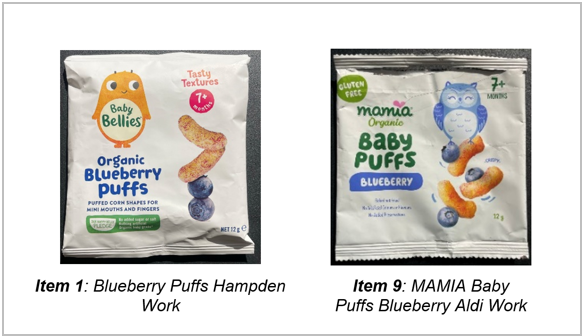
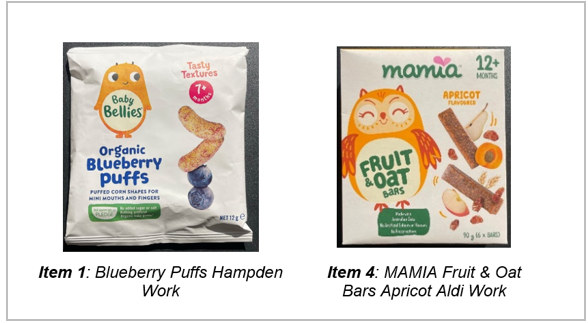
The appeal concerned claims by Hampden that products marketed by Aldi under its MAMIA brand infringed copyright in the packaging of Hampden’s BABY BELLIES, LITTLE BELLIES and MIGHTY BELLIES baby and child food products.
The crux of the appeal was whether Aldi’s packaging reproduced a ‘substantial part’ of the relevant Hampden works within the meaning of the Copyright Act 1968 (Cth).
At trial, Justice Moshinsky found that the packaging of three Aldi products (the puff works) reproduced a substantial part of Hampden’s copyright works, whereas six other products (non-puff works) did not have the requisite degree of similarity.
On appeal, the Full Court found that the trial judge had erred by abstracting a list of seven design elements from the Hampden works, for example ‘a small oval-shaped cartoon character, with a large, light-coloured belly’, and deciding whether they were wholly present or not present in the Aldi works.
The Full Court emphasised the need to undertake a detailed side-by-side analysis of each of the relevant works, having regard to all the similarities and differences between them and the nature and extent of those similarities and differences. The Court noted that the fact that an infringer has made changes does not immunise it from a finding of infringement, and once sufficient similarities have been identified, the Court need not have any regard to differences in the impugned work.
The Court also confirmed that the originality of the part taken and the skill and labour applied to the expression of the copyright work are relevant factors when determining substantial reproduction. Relevantly, Hampden had provided detailed evidence showing significant effort went into the creation of its packaging works.
After its own analysis, the Full Court confirmed the trial judge’s finding that the three Aldi puff works infringed Hampden’s works, albeit on a narrower basis, with only a single Hampden work found to be infringed. The Full Court also found that two of the non-puff works infringed Hampden’s copyright.
In terms of damages, the Full Court affirmed the trial judge’s finding that Aldi was liable for additional damages, despite instructing its designers to avoid infringing copyright. The Full Court found Aldi had deliberately courted a risk while seeking to obtain a commercial advantage and accordingly ran the risk that its conduct would lead to additional damages.
From a practical perspective, the Full Court’s decision in Hampden emphasises the copyright infringement risks of seeking to emulate the packaging of a competitor. For brand owners, it also serves as a timely reminder to keep detailed records of the creation process for all product artworks, for the purpose of establishing originality.
By: Harrison Ottaway and Laura McFadzean