Category:Entertainment & Arts

1
UK Advertising Regulator makes first ever ruling on disclosures required for commercial marketing via a TikTok video
2
Air France restrained from using song that infringes “Love Is In The Air”
3
Protecting Animated Logos – LA28 Ushers In A New Era
4
Can’t “Shake It Off” Yet: Court Denies Taylor Swift’s Motion to Dismiss Copyright Infringement Lawsuit
5
Addressing Possible Limits of COPPA Safe Harbors
6
Court finds ‘flagrant’ copyright infringement of ‘Love is in the Air’
7
Who Owns an Athlete’s Tattoos? The Player? The Tattoo Artist? A Licensor?
8
Does AI generated work give rise to a copyright claim?
9
Music to our ears: some clarity on joint authorship of copyright
10
UKIPO knocks undefeated Reds off their perch – The LIVERPOOL trade mark and lessons for brand owners

UK Advertising Regulator makes first ever ruling on disclosures required for commercial marketing via a TikTok video

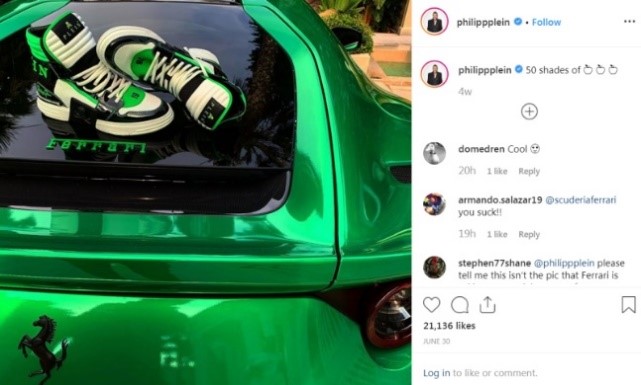
A TikTok post on an Emily Canham’s account, a beauty blogger and YouTube star, is the first TikTok video found to be in breach of the Advertising Standards Authority’s (ASA) requirement for disclosure in the UK (see here).

The post, which featured a video of Emily Canham using a branded hairdryer and straighteners, included a caption alongside the video stated:

hiii just a lil psa there’s 20% off the [Brand] website TODAY ONLY with the code EMILY … #fyp #foryourpage“.

The brand in question had entered into an agreement with Ms Canham, which required Ms Canham to post a number of social media posts while at a music festival. The music festival was cancelled as a result of COVID-19. However, the contract was varied and still required several social media posts featuring a certain promotional code.

It was submitted to the ASA that the TikTok was created without the oversight or approval of the brand, and did not form part of Ms Canham’s contract. Additionally, both Ms Canham and the brand pointed to the fact that she had not been compensated for the promotional code featured in the TikTok video.

Read More

Air France restrained from using song that infringes “Love Is In The Air”

In April, we wrote about the judgement Boomerang Investments Pty Ltd v Padgett (Liability) [2020] FCA 535 (Decision), in which Glass Candy and Air France were found to have infringed the copyright in the well-known 1970s hit song “Love is in the Air” (Love).

Now, in the recent judgement Boomerang Investments Pty Ltd v Padgett (Scope of Injunction) [2020] FCA 1413, the Federal Court of Australia has finalised the injunctive orders necessary to give effect to the Court’s earlier conclusions on the issue of liability in the Decision, amongst other matters.

Read More

Protecting Animated Logos – LA28 Ushers In A New Era

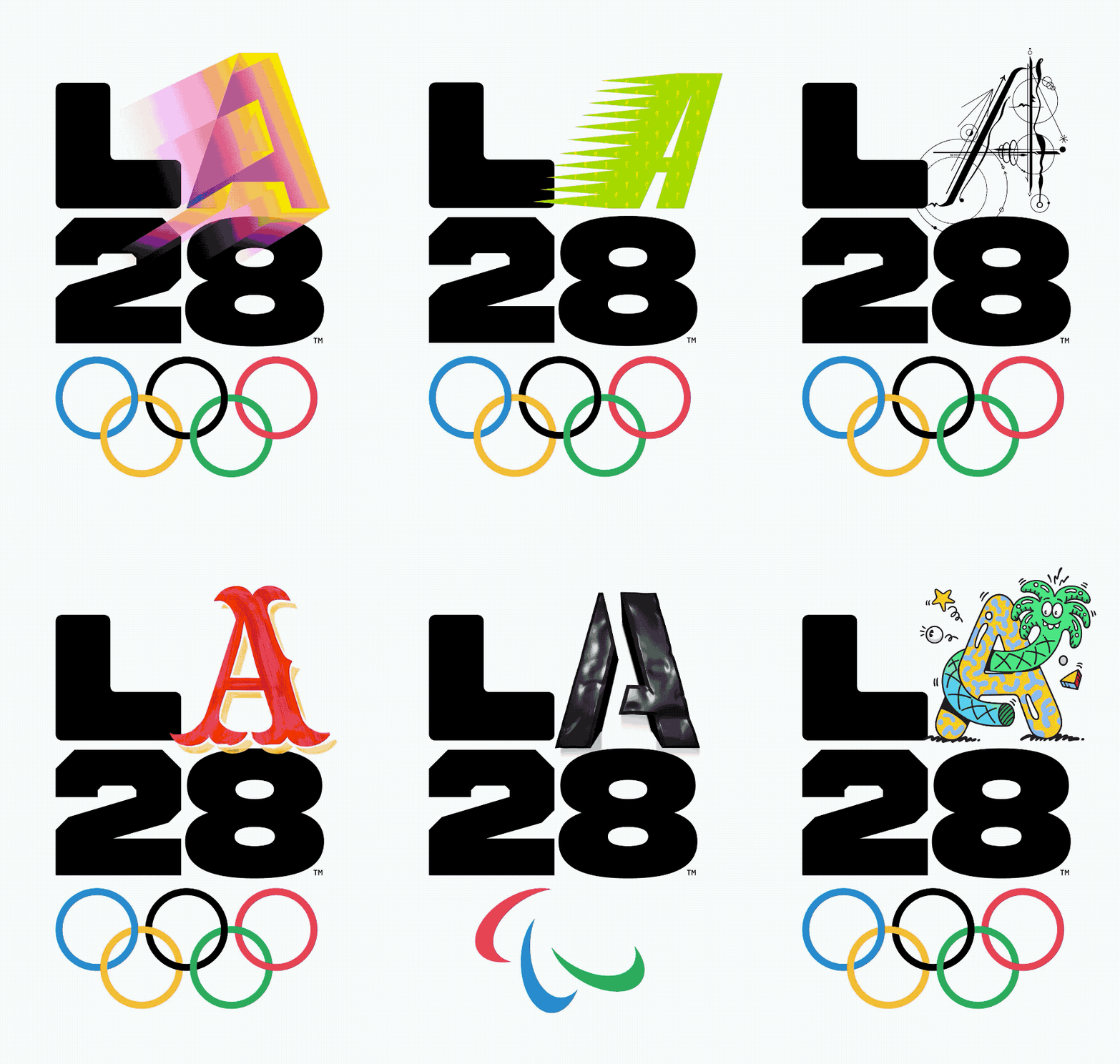
The Los Angeles Organizing Committee for the 2028 Olympic & Paralympic Games (LA28) has recently unveiled the official LA28 emblem, which, for the first time, is an animated emblem consisting of multiple logos (shown below). “Built for the digital age”, LA28 has designed the emblem to “evolve over time, reflecting [Los Angeles’] spirit of limitless possibility”.

Read More

Can’t “Shake It Off” Yet: Court Denies Taylor Swift’s Motion to Dismiss Copyright Infringement Lawsuit

On September 2, 2020, a California federal judge denied musician Taylor Swift’s motion to dismiss copyright infringement claims related to the lyrics in Swift’s hit song Shake It Off. On remand from the Ninth Circuit, the district court held the merger doctrine did not apply at this stage and that plaintiffs Nathan Butler and Sean Hall sufficiently alleged a protectable sequence of creative expression and substantial similarity in the lyrics at issue. This ruling comes nearly three years after Hall and Butler originally filed suit, and nearly one year after the Ninth Circuit breathed new life into the case by reversing the district court’s prior dismissal of this lawsuit.

Read More

Addressing Possible Limits of COPPA Safe Harbors

On May 18, 2020, FTC Commissioner Rohit Chopra issued a statement regarding concerns of the Children’s Online Privacy Protection Act (COPPA) Safe Harbor programs. Sparked by the ouster of the mobile gaming player, Miniclip S.A., from the Children’s Advertising Review Unit’s (CARU) Safe Harbor program, the FTC announced action against Miniclip to order the cessation of its alleged misrepresentations regarding Miniclip’s participation in the self-regulatory program. A proposed settlement Consent Order was agreed and will published in the Federal Register for public comment shortly.

Read More

Court finds ‘flagrant’ copyright infringement of ‘Love is in the Air’

In its recent judgment (Boomerang Investments Pty Ltd v Padgett (Liability) [2020] FCA 535), the Federal Court of Australia has found that an American electronic musical duo copied the celebrated Australian disco song ‘Love Is In The Air’. The decision confirms that the sound of lyrics as sung forms part of a musical work. Furthermore, a short sung lyric with attending music can be the ‘essential air’ of a song.

While determining only “modest” levels of copyright infringement occurred and dismissing most claims for damages, Justice Perram described the copying as “flagrant” and indicated there will be a further hearing to assess damages.

Read More

Who Owns an Athlete’s Tattoos? The Player? The Tattoo Artist? A Licensor?

Who owns a celebrity’s tattoo, and the extent to which that tattoo can be displayed in a commercial context, raises right of publicity, copyright, and trademark issues. A district court in the recent Solid Oak case found no copyright infringement where a video game incorporated tattoos as inked on professional NBA players. Solid Oak Sketches, LLC v. 2K Games, Inc., No. 16-CV-724-LTS-SDA (S.D.N.Y. March 26, 2020).

This case considered use of tattoos as part of lifelike depictions of professional athletes in video games, however the ruling easily relates to individuals with tattoos who commodify their likeness such as celebrities, social media influencers, and musicians.

Read More

Does AI generated work give rise to a copyright claim?

The right to intellectual property protection in “Artificial Intelligence” generated work gives rise to numerous legal, economic and moral issues. “Artificial Intelligence” (AI) is a comprehensive term used to describe the ability of computer systems to perform tasks normally requiring human intelligence, ranging from translation processes and visual perception to brain simulation.

In this post, we give a brief introduction to the legal issues surrounding claims to copyright in AI generated work in the context of UK law and specifically, who can claim ownership of the work produced.

Read More

Music to our ears: some clarity on joint authorship of copyright

In the recent decision of the case Kogan v Martin, the UK Court of Appeal overturned an Intellectual Property Enterprise Court (IPEC) decision and identified a new test for determining when contribution is sufficient to be recognised as a joint author of a copyright work.

The case has now been remitted for a retrial before a different judge, due to the judge of first instance adopting an erroneous approach to the evidence and applying incorrect legal standards.

Read More

UKIPO knocks undefeated Reds off their perch – The LIVERPOOL trade mark and lessons for brand owners

To the interest of many a scouser and football fan alike, Liverpool Football Club’s attempt to register as a UK trademark LIVERPOOL has been rejected by the UKIPO on the grounds that the word is of “geographical significance” to the city. Liverpool FC had filed its application in regards to various goods in relation to football and the filing had attracted significant public attention.

Other English football clubs (Everton, Chelsea and Tottenham) have managed to register several trade marks for each of their respective area names. In addition Southampton Football Club has managed to register SOUTHAMPTON as an EU trade mark. As a result, it is not surprising that Liverpool FC would seek to register a similar mark to help protect its valuable brand.

However, as a result of the filing the club received significant backlash from the people of Liverpool, including their own supporters, and – probably in a related move – Liverpool FC has said that it does not plan to appeal the refusal and it has withdrawn the application. An additional trade mark application for LIVERPOOL with different claims has also been withdrawn.

The matter presents a great case study for brand owners on balancing the need to protect their brand whilst being considerate of the potential adverse PR that will come with the application for certain trade marks.

Read More

Copyright © 2025, K&L Gates LLP. All Rights Reserved.