UAE to Join the Madrid Protocol
In great news for companies that file trade marks internationally, the Government of the United Arab Emirates has agreed to join the Madrid Protocol from 28 December 2021.
Read MoreIn great news for companies that file trade marks internationally, the Government of the United Arab Emirates has agreed to join the Madrid Protocol from 28 December 2021.
Read MoreA clear cut case of copyright infringement involving Twisted Sister’s hit song “We’re Not Gonna Take It” (WNGTI) has demonstrated the Court’s willingness to award significant financial penalties where intellectual property rights have been “flagrantly” infringed.
In Universal Music Publishing Pty Ltd v Palmer (No 2) [2021] FCA 434, Justice Katzmann of the Federal Court ordered Australian businessman and United Australia Party (UAP) founder Clive Palmer to pay AU$1.5 million in damages after finding that he had infringed copyright in WNGTI. Katzmann J notably awarded AU$1 million in additional damages, two-thirds of the total award, under section 115(4) of the Copyright Act 1968 (Cth) (Act).
The action was brought against Mr Palmer by joint applicants Universal Music Publishing Pty Ltd and Songs of Universal (collectively, Universal), which are the exclusive Australian licensee and copyright assignee respectively.
Read MoreThe first substantial amendments to China’s Copyright Law in 20 years were passed in November 2020 and will come into effect on 1 June 2021 (the Amendments). The Amendments primarily focus on enhancing protections for copyright owners, better aligning China’s Copyright Law with international standards, and implementing the Beijing Treaty on Audiovisual Performances that entered into force in April 2020.
The heavy deterrence-related focus of the revised Copyright Law will strengthen protections for copyright owners, particularly relating to digital piracy.
Read MoreFirst there were CryptoKitties. Then came Digital art, CryptoPunks and NBA tokens. But when Beeple’s digital art piece sold at Christie’s for $69 million, the mania truly began. And as with any wave of media mania, also came the groundswell of negative media and hand-wringing about NFTs. Of course, NFTs are not all evil nor are they a panacea for artists and musicians. If properly issued and positioned, they can provide a win-win for both artists and collectors.
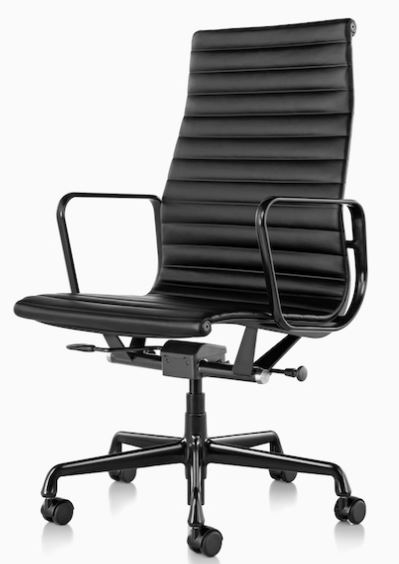
Read MoreThe U.S. Supreme Court decided not to take up Herman Miller, Inc.’s appeal from a Ninth Circuit holding that partially overturned a jury verdict and held that Herman Miller’s popular Eames office chair (average retail price US$1,200) is not “famous” enough to qualify for trade dress dilution protection.[1] The Supreme Court’s denial of Herman Miller’s petition means the Ninth Circuit’s decision will stand.

In a technological age where most consumers are receiving their information digitally, brands need to find new ways to engage with consumers. With nine out of ten Australians owning a smart phone and spending on average three hours a day on their devices, consumer engagement by way of multimedia is growing, increasing the popularity of movement trade marks.
The first movement trade mark was registered in Australia in 2002. There are currently 99 registered movement trade marks in Australia.
Read MoreCOVID-19 and the many national lockdowns that have followed have caused a huge shift in advertising and marketing. Suddenly, everyone is at home and receiving nearly all content digitally; through their phones, tablets and TVs, and advertising budgets have been sliced and squeezed as companies shift scarce resources to other parts of their business.
Regulators are faced with a new challenge and responsibility to protect consumers from companies who would price gouge and profit from panic caused by COVID-19. The UK regulator, the Advertising Standards Authority (ASA), has published a fair number of decisions and guidance in relation to the coronavirus.
Read MoreThe Designs Amendment (Advisory Council on Intellectual Property Response) Bill 2020 (Bill), with important changes to designs law, is currently before Senate for consideration. It includes a much-anticipated change to implement a grace period that will allow designers to publish their designs before applying for design protection.
Read MoreIn the recent judgment State of Escape Accessories Pty Limited v Schwartz [2020] FCA 1606, Justice Davies of the Federal Court of Australia found a fashionable neoprene tote bag was not a “work of artistic craftsmanship” and therefore not an “artistic work” for the purposes of the Copyright Act 1968 (Cth) (the Act). Since the Court found that copyright did not subsist in the State of Escape bag (the Escape Bag), there was no finding of copyright infringement.
Read MoreUse of Ferrari’s trade mark in a fashion show or on social media requires consent. This is the lesson we assume Philipp Plein has recently learnt following a couple of legal defeats before the Italian Courts that ruled in favour of Ferrari.
In a ruling issued by the Court of Genova last June, the Court ruled in favour of Ferrari for the illegitimate use of Ferrari’s trade marks on Plein’s Instagram account. The designer on that occasion posted several pictures as well as Instagram stories showing some of his clothing line with Ferrari’s trade marks in the background. Ferrari successfully argued that in those shots Philipp Plein was unlawfully appropriating the positive image and reputation of the well-known car company by using its trade marks for promotional purposes.

In another recent case, the Court of Milan ordered Plein to remove from its website, social media, and other online platforms all the videos and images showing Ferrari cars and trade marks. The Court also ordered the payment, in favour of Ferrari, of €300,000 in damages plus legal fees as well as the publication of the decision in two national newspapers. Furthermore, in the event in which that Philipp Plein would not promptly remove the contested images and videos representing Ferrari cars and trade marks, it will have to pay a penalty of €10,000 for each day of delay in the removal of the infringing images and videos. To view the decision, click here.
Read MoreCopyright © 2025, K&L Gates LLP. All Rights Reserved.