Trade Mark Re-filing and Bad Faith – Go Directly to Jail. Do Not Pass GO, Do Not Collect $200 – Part Two: General Court Ruling
2
British Amateur Gymnastics Association rolls and tumbles to trade mark enforcement against UK Gymnastics – UK Court of Appeal upholds trade mark infringement finding
3
When Is an Office Chair Design Famous? U.S. Supreme Court Won’t Hear Herman Miller’s Trade Dress Appeal Regarding the Eames Chair
4
High Court of New Zealand Trade Mark Clash Over the Colour Green
5
Battle of the Bentleys: Bentley Motors loses trade mark appeal against Bentley Clothing
6
Don’t mess with Ferrari: the Prancing Horse legal drama
7
Putting Position Marks Front and Centre: CJEU Considers Assessment of Position Marks for Services
8
Louis Vuitton playing chess or checkers? The CJEU annuls’ the invalidation of Louis Vuitton’s EU trade mark
9
Protecting Animated Logos – LA28 Ushers In A New Era
10
Reputation and likelihood of confusion – it’s all a bit of a Messi…
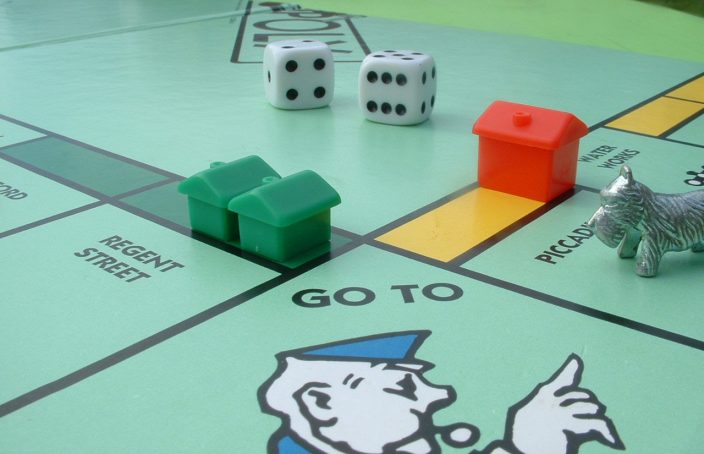
On 21 April 2021, the General Court of the European Union refused Hasbro’s appeal to overturn a decision that partially invalidated its EU trade mark for MONOPOLY on the ground of acting in bad faith when filing the application. The judgement by the General Court has ramifications for brand owners in both the law of bad faith but also in the practice of evergreening (repeatedly filing for an identical mark covering a broad specification of classes as the period of protection for the mark draws to an end).
A recent UK Court of Appeal case has highlighted the importance of assessing the conceptual similarity of marks and not just their aural and visual similarities, when considering a potential trade mark infringement.
The UK Court of Appeal was hearing an appeal from a decision of the Intellectual Property Enterprise Court concerning a claim by the British Amateur Gymnastics Association (“BAGA”) against UK Gymnastics and UK Gymnastics Affiliation (together “UKG”) for trade mark infringement and passing off. BAGA is a not for profit private company and recognised as the national governing body for the sport of gymnastics in the UK. UKG is a gymnastics sporting body that provides: membership services to individual gymnasts, gymnastics clubs and coaches; competitions; courses and badge/certification programmes among other services.
At first instance, HHJ Melissa Clarke found UKG liable for infringement of BAGA’s trade marks and passing off. UKG were granted permission to appeal on limited grounds which are listed below.
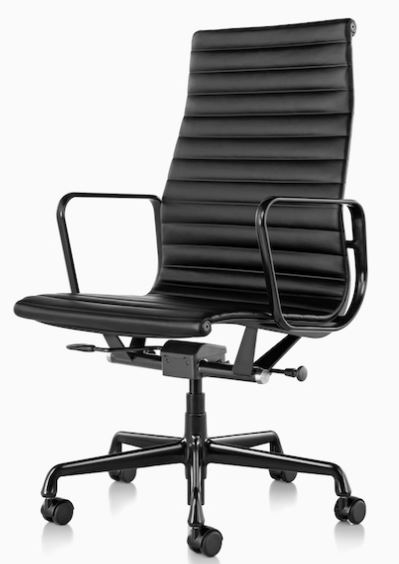
The U.S. Supreme Court decided not to take up Herman Miller, Inc.’s appeal from a Ninth Circuit holding that partially overturned a jury verdict and held that Herman Miller’s popular Eames office chair (average retail price US$1,200) is not “famous” enough to qualify for trade dress dilution protection.[1] The Supreme Court’s denial of Herman Miller’s petition means the Ninth Circuit’s decision will stand.
The High Court of New Zealand in Energy Beverages LLC v Frucor Suntory NZ Limited [2020] NZHC 3296 ruled that energy drink company Frucor Suntory NZ Ltd’s (Frucor) non-traditional green colour trade mark was valid. This decision is a rare example of a New Zealand based Court analysing non-traditional marks and highlighting the difference to Australia’s position. A full copy of the decision can be found here.
Luxury car manufacturer Bentley Motors has lost its appeal against a ruling which found it infringed the trade marks of a small, family company called Bentley Clothing. A full copy of the decision can be found here.
Following the ruling, Bentley Motors must stop using the trade mark BENTLEY and their combination sign – the B-in-Wings logo and the word BENTLEY (shown below) – on clothing.
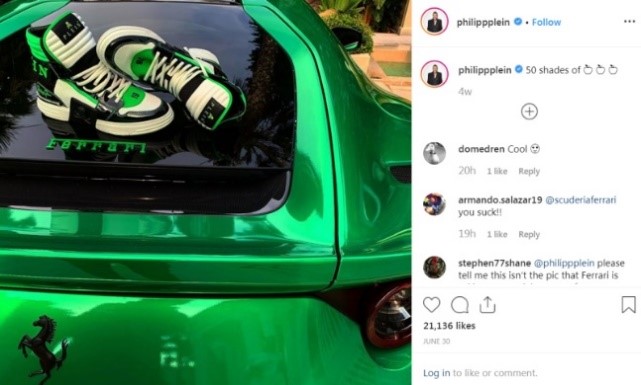
Use of Ferrari’s trade mark in a fashion show or on social media requires consent. This is the lesson we assume Philipp Plein has recently learnt following a couple of legal defeats before the Italian Courts that ruled in favour of Ferrari.
In a ruling issued by the Court of Genova last June, the Court ruled in favour of Ferrari for the illegitimate use of Ferrari’s trade marks on Plein’s Instagram account. The designer on that occasion posted several pictures as well as Instagram stories showing some of his clothing line with Ferrari’s trade marks in the background. Ferrari successfully argued that in those shots Philipp Plein was unlawfully appropriating the positive image and reputation of the well-known car company by using its trade marks for promotional purposes.
In another recent case, the Court of Milan ordered Plein to remove from its website, social media, and other online platforms all the videos and images showing Ferrari cars and trade marks. The Court also ordered the payment, in favour of Ferrari, of €300,000 in damages plus legal fees as well as the publication of the decision in two national newspapers. Furthermore, in the event in which that Philipp Plein would not promptly remove the contested images and videos representing Ferrari cars and trade marks, it will have to pay a penalty of €10,000 for each day of delay in the removal of the infringing images and videos. To view the decision, click here.
In a recent Court of Justice of the European Union (CJEU) ruling, based on a referral from the Stockholm Court of Appeal, the CJEU considered whether the distinctiveness of a sign that is to be applied to specific services should be assessed with regard to what is customary in the relevant sector. A full copy of the decision can be found here.
The Court clarified that, in the context of trade marks for services, the assessment of a sign’s distinctiveness should not always involve an assessment of norms and/or customs of the sector.
Louis Vuitton received a favorable decision from the EU General Court (“General Court”) in June 2020 which may assist brand owners seeking IP protection of their decorative patterns. The decision confirms the distinctive character an EU trade mark must possess in order to benefit from protection throughout the EU as well as highlighting how patterns may be protected through registration as a trade mark rather than under other forms of IP protection such as copyright or design protection. However, the decision also reaffirmed the EU’s strict approach to assessing the unitary character of EU trade marks, which potentially sets a high bar for applicants to clear.
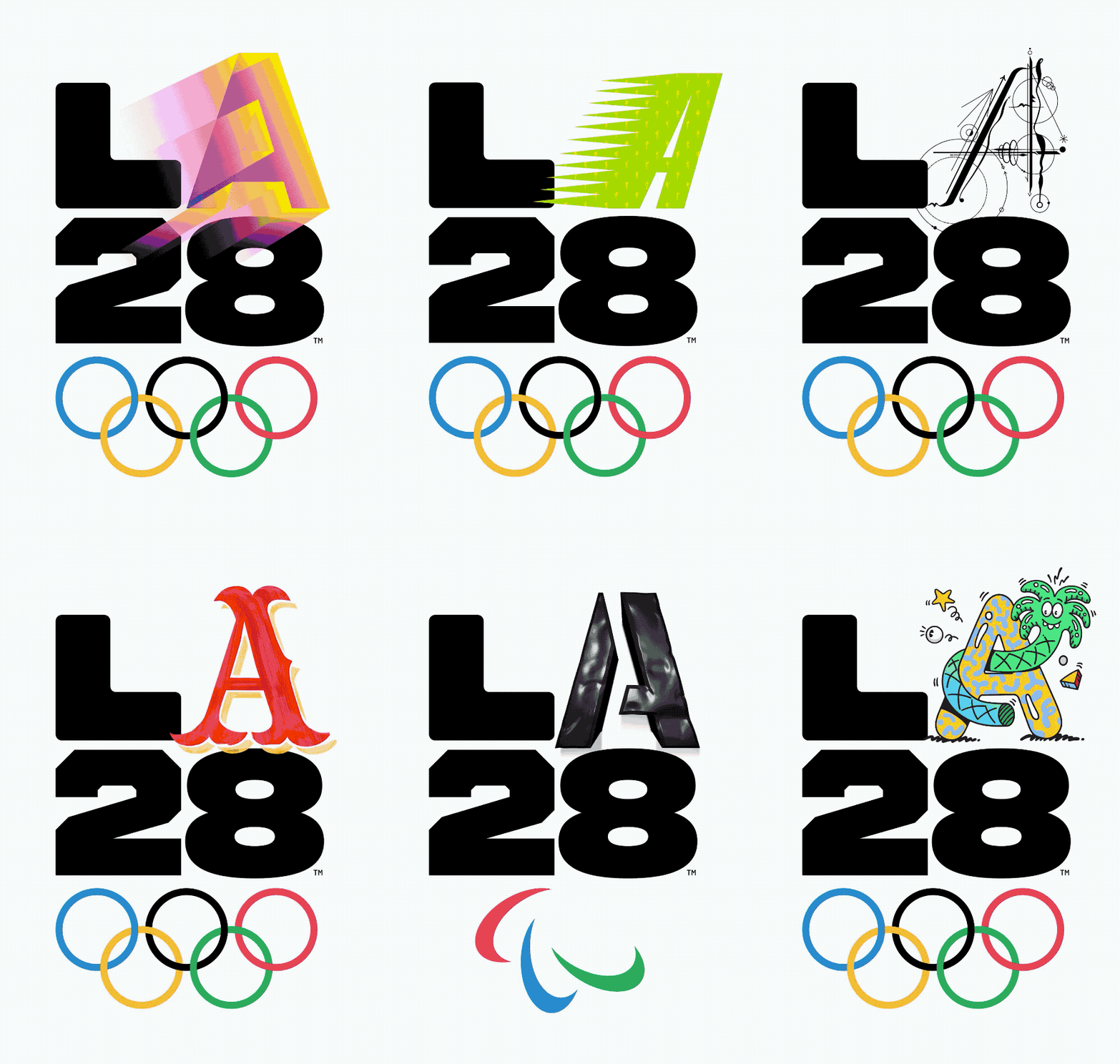
The Los Angeles Organizing Committee for the 2028 Olympic & Paralympic Games (LA28) has recently unveiled the official LA28 emblem, which, for the first time, is an animated emblem consisting of multiple logos (shown below). “Built for the digital age”, LA28 has designed the emblem to “evolve over time, reflecting [Los Angeles’] spirit of limitless possibility”.
CJEU determines no likelihood of confusion between footballer’s “Messi” figurative mark and earlier MASSI mark.
Whilst debate will continue to rage as to whether Messi or Ronaldo is the world’s best male football player, the Court of Justice of the European Union (the “CJEU”) has ruled that Argentine superstar can register his name as a trade mark after an almost decade long legal battle.
In an interesting decision for trade mark fanatics, irrespective of their interest in football, the CJEU stated that Lionel Messi’s reputation could be taken into account, without any evidence of said reputation being provided, when weighing up whether the public would be able to determine the uniqueness of Messi’s mark.